House of Aldren; Turning a menu into a full ordering experience

Most restaurant menus are static PDFs pretending to be an experience. They don't reflect what's actually available, they don't help guests decide faster, and they leave the entire journey (from browsing to paying) disconnected from the table.

Product Design
NO-CODE DEVELOPMENT
webflow CMS
Visit live site
House of Aldren dining app case study cover
01/ Beyond the static PDF menu

What House of Aldren is about

‍

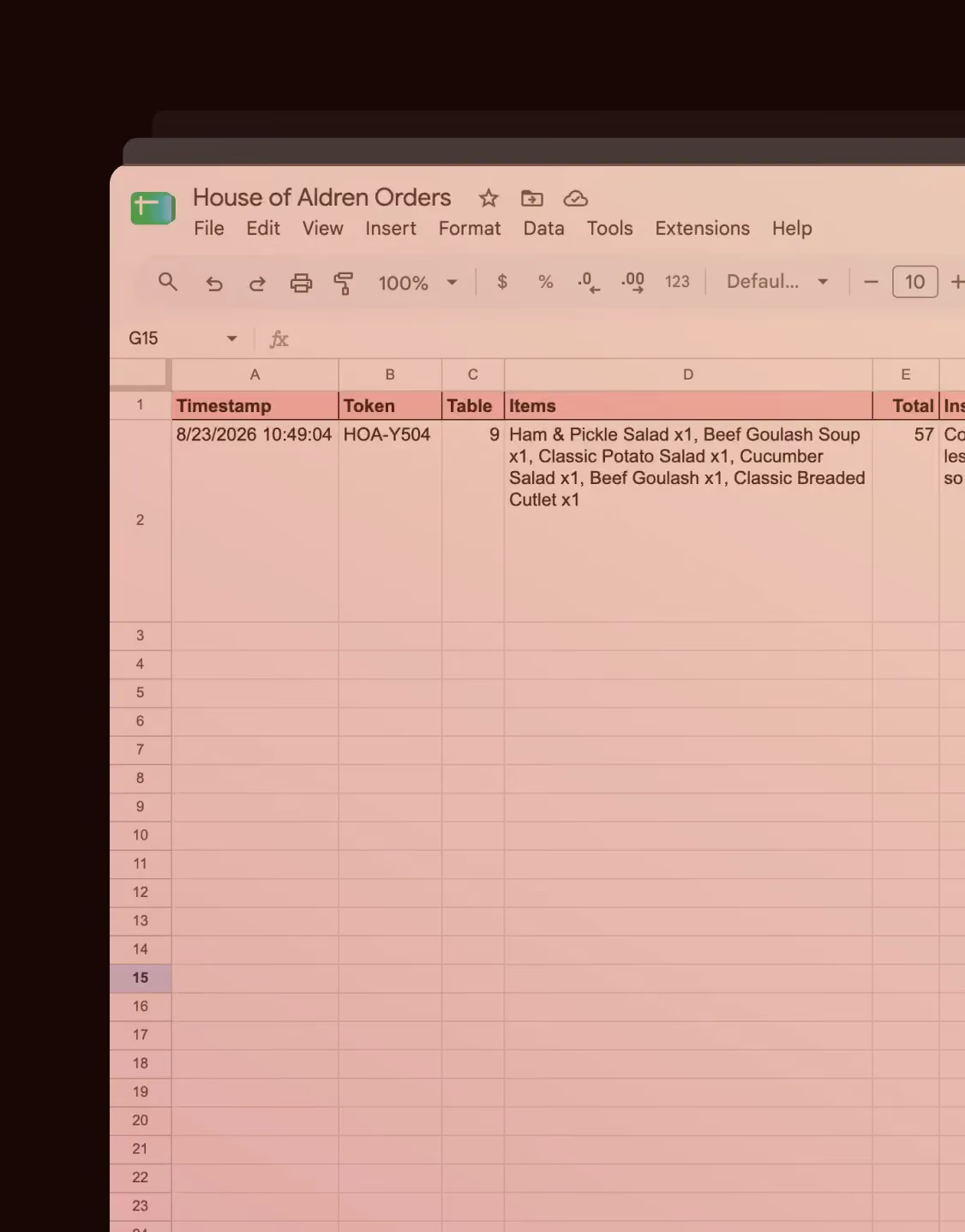
House of Aldren is a CMS-powered digital dining system that replaces the printed menu with a full ordering experience guests access straight from their table via QR code. It's not just a browsable menu — it guides guests through one continuous flow: filter dishes by category, save favorites, search by name, and place an order that's instantly logged and trackable in real time.

‍

The platform bridges two worlds: a rich, visual-first browsing experience for guests still deciding what to eat, and a fast, frictionless checkout for guests ready to order. Every dish, price, and image lives in a CMS collection, so the restaurant can update the menu without touching code. This project focused on making a fully custom ordering system feel as fast and native as a purpose-built app — built entirely inside Webflow.

Role
Product Designer & No-Code Developer
Duration
2 weeks
Deliverable(s)
Complete platform UI/UX, CMS architecture, QR order flow, Live order tracking
Tools
Webflow, Figma, GitHub, Google Apps Script
02/ How diners really decide at the table

Understanding what diners actually struggle with

‍

The first step was getting out of assumptions and into how people actually behave at a table.

‍

Discovery work centered on:

  • Understanding why printed/PDF menus create friction at the table
  • Identifying the gap between "browsing" and "ordering" — most digital menus stop at browsing
  • Mapping how guests actually decide what to eat (visuals + quick filtering, not long text)
  • Studying where QR-menu experiences lose guests (slow load, no images, no order status)
  • Internal discussions on balancing rich visuals with fast performance on mobile data

‍

Guests don't want a prettier menu — they want to go from "what looks good" to "it's ordered" without flagging down a waiter.

The real problem wasn't digitizing the menu. It was compressing the entire discovery-to-order journey into a single, table-side flow.

House of Aldren dining app research and discovery
03/ From browsing to ordering in fewer taps

Designing for speed and clarity

‍

The design needed to do something most QR menus skip: turn browsing into an actual decision-making tool, not just a digital price list.

‍

Making discovery visual-first:
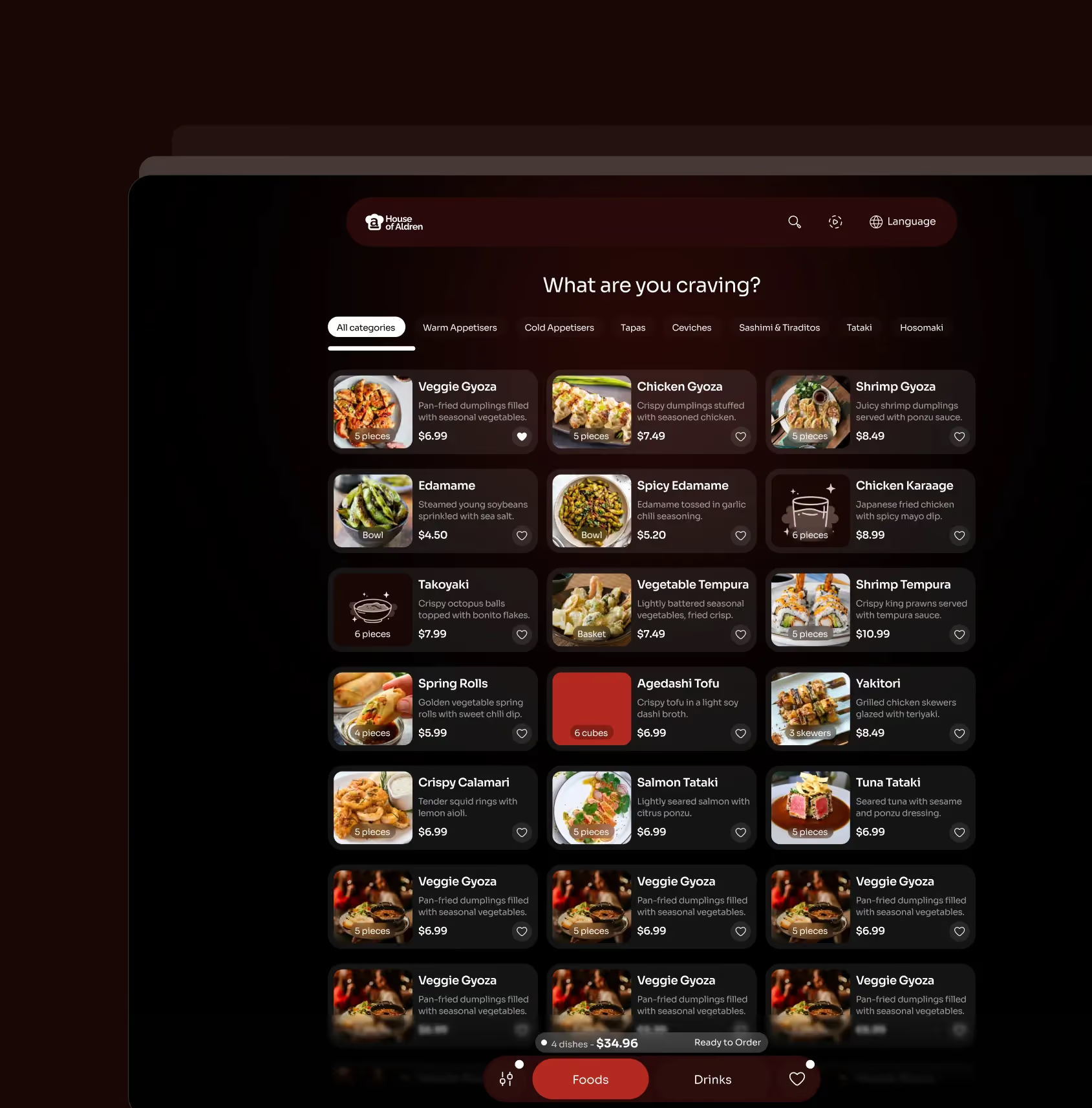
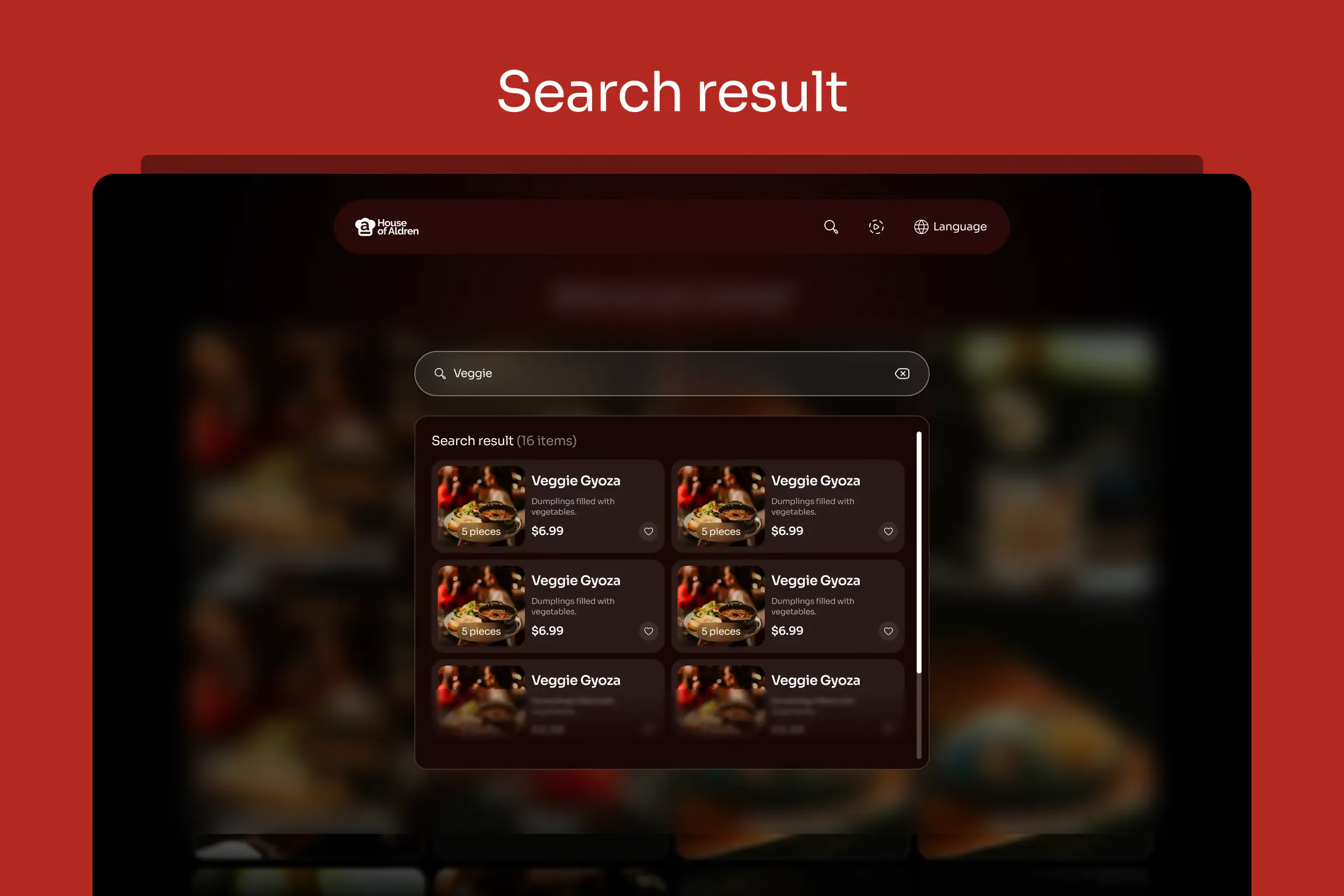
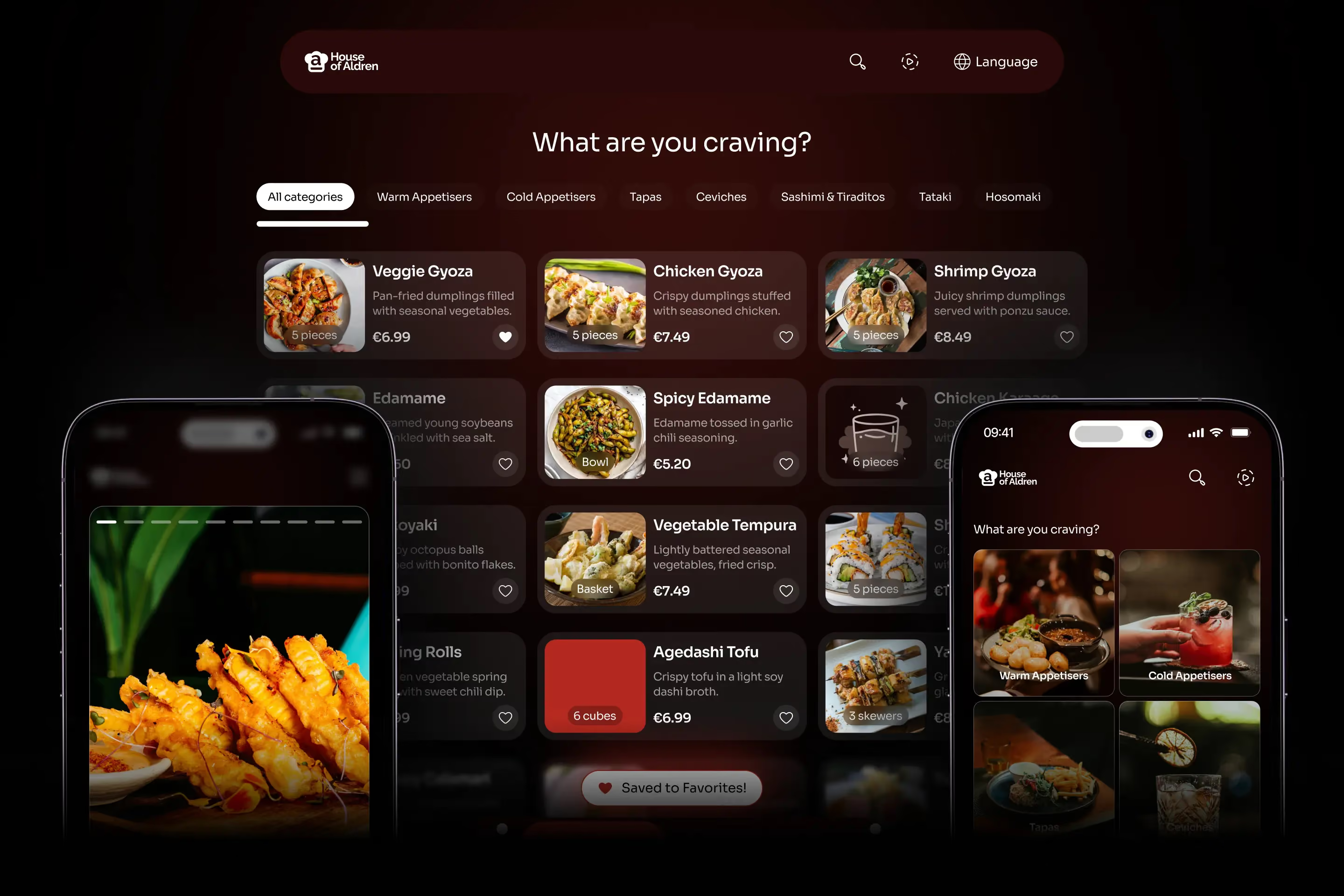
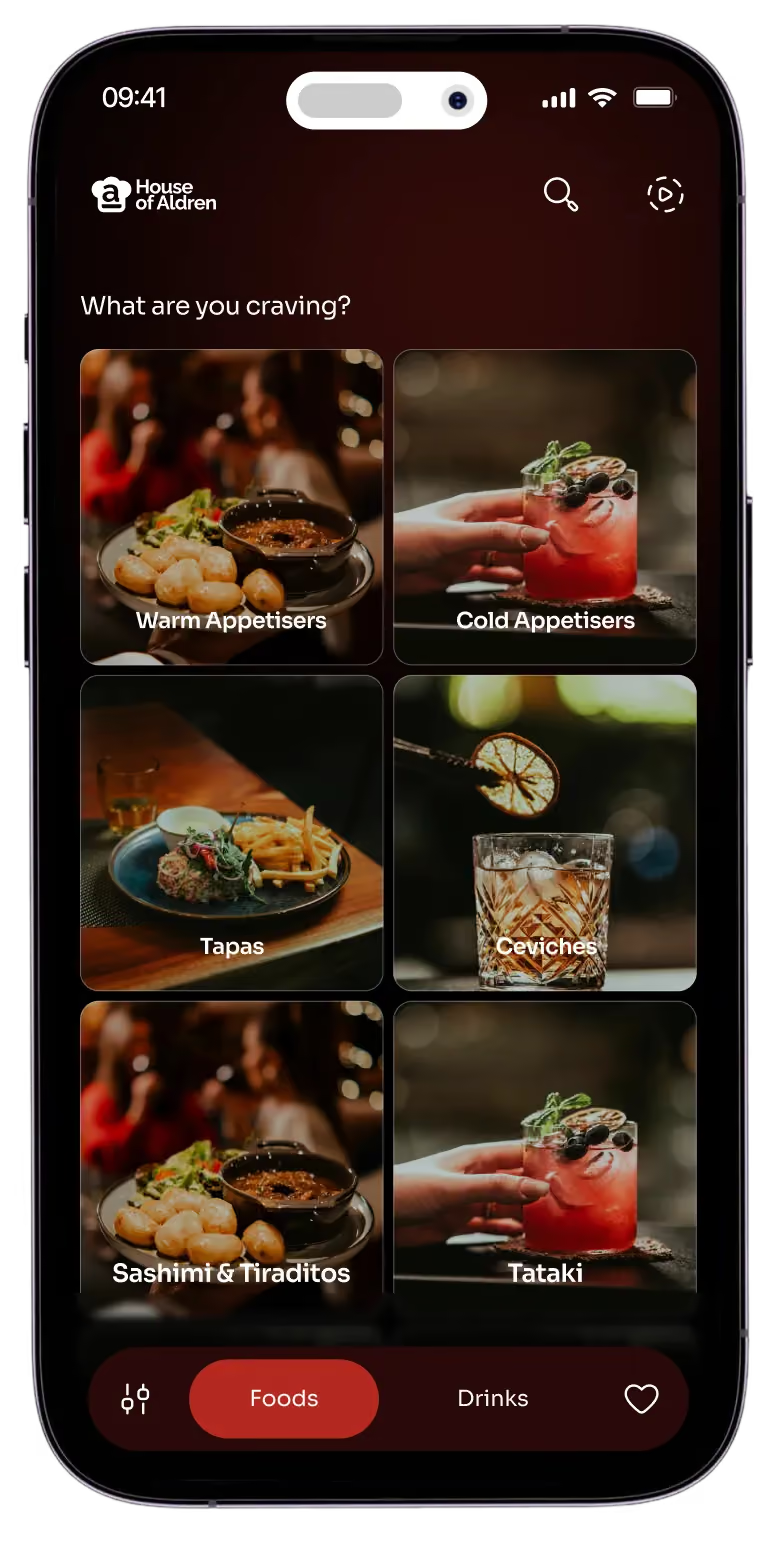
Every dish leads with an image, not a text row. Guests scan visually the way they would a physical menu — quickly, by category — instead of reading line by line.

‍

Favorites as a decision tool:

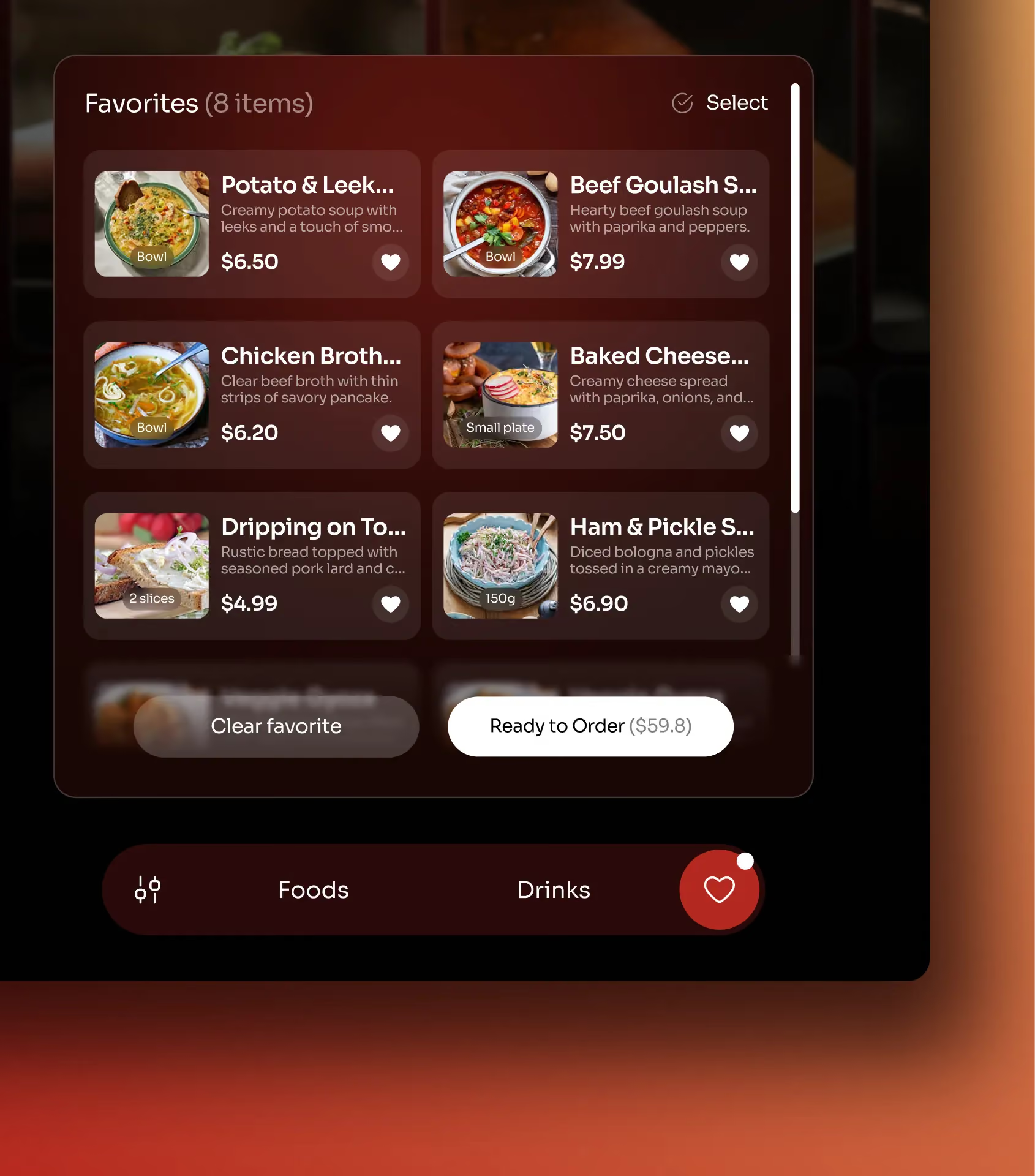
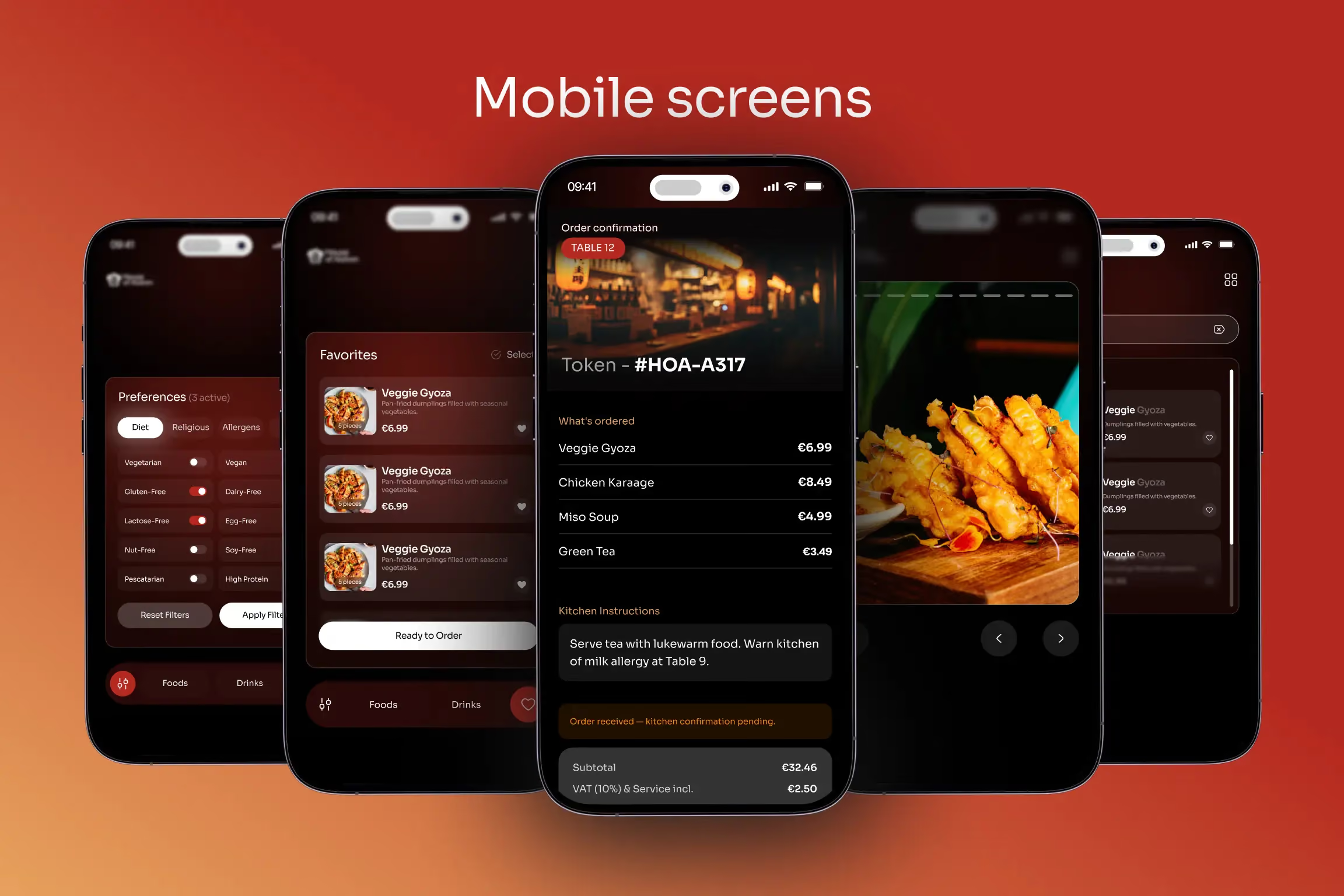
‍Favorites aren't just a bookmark — they let guests build a shortlist while browsing before committing to a final order, mirroring how people actually decide what to eat at a table (compare, then choose).

‍

Embedding a WhatsApp-style highlights slider:

‍A familiar horizontal "stories" pattern surfaces daily specials and chef picks. Guests already know this interaction from messaging apps, so no onboarding is needed — they just tap through.

‍

QR-first order handoff:

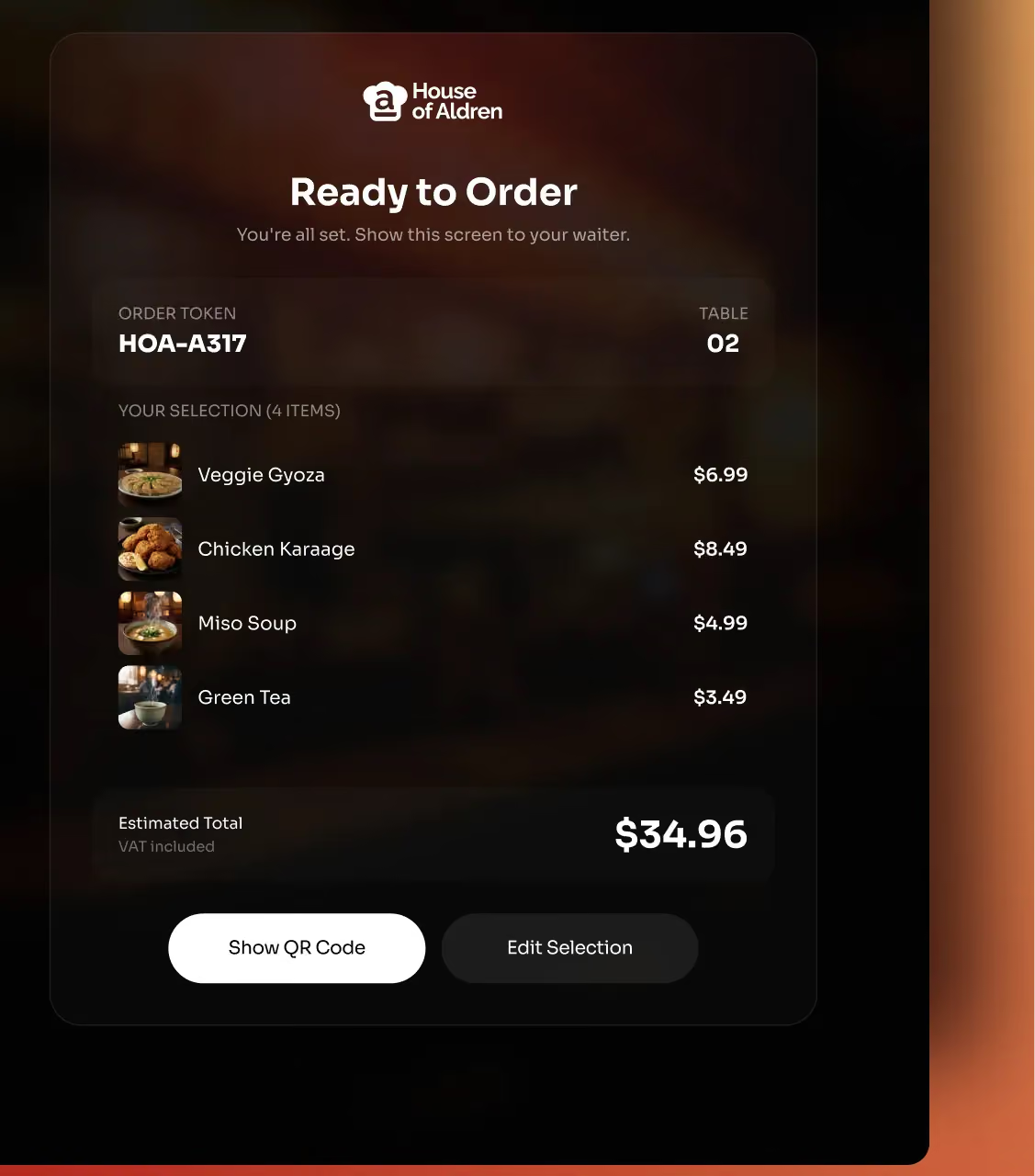
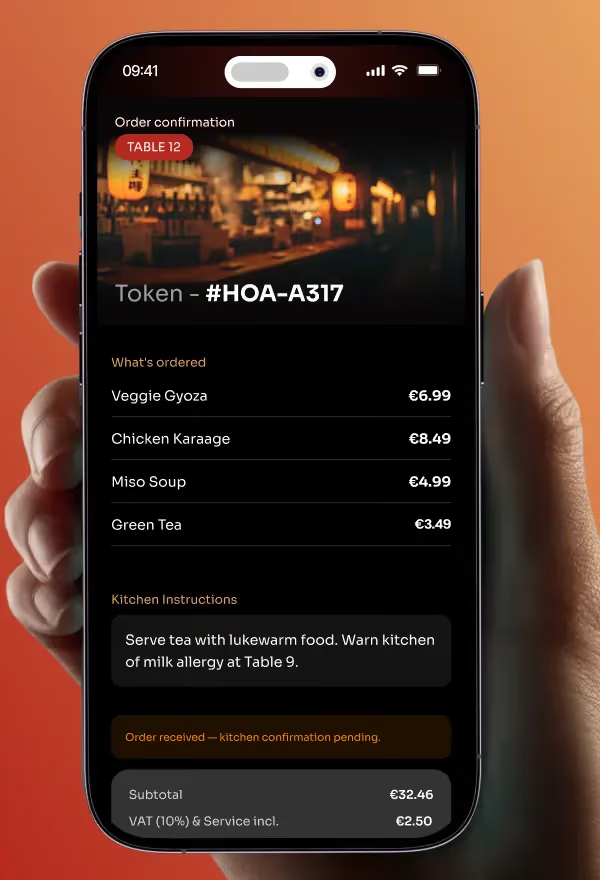
‍Checkout generates a styled, scannable order code. Guests get an instant confirmation, and staff can pull up the exact order — items, table, instructions — without back-and-forth.

‍

Manual visibility, always:

‍Guests can see live order status (Pending → Complete) without needing to ask a server — the same "make it visible, not a black box" principle applied to service, not just AI.

House of Aldren dining app solution screens

Some of my favorite screens

House of Aldren dining app menu screen

Menu browsing experience

‍

Finding a dish shouldn't feel like reading a spreadsheet

‍

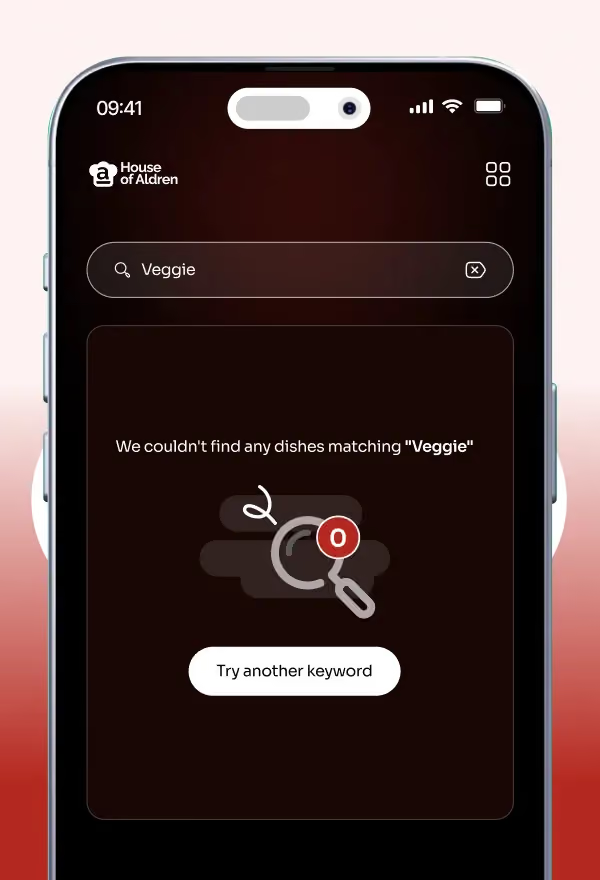
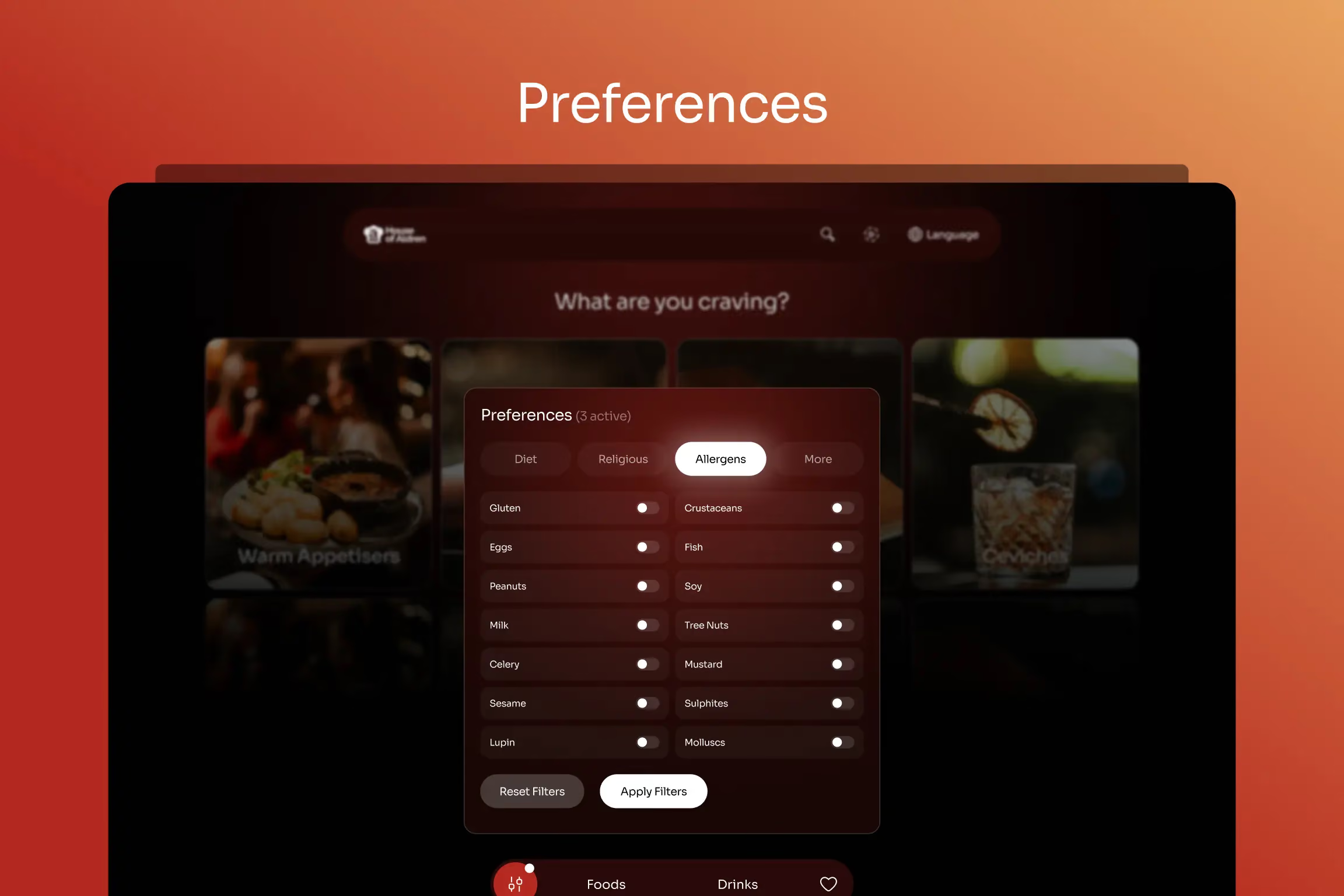
The main menu screen surfaces dishes by category with instant filtering and search. No scrolling through a flat PDF — guests narrow down by what they actually want (dietary tags, category, price) in a couple of taps.

Favorites and daily highlights

‍

Built for indecisive tables

‍

Guests can shortlist dishes as they browse, and the WhatsApp-style highlights slider surfaces what's new or featured today, solving the "we've been here 10 minutes and still can't decide" moment.

House of Aldren dining app favorites screen
House of Aldren dining app order summary screen

Order summary & QR handoff

‍

From decision to kitchen, instantly

‍

Once the order's confirmed, a styled QR code is generated and the order is logged in real time. No app download, no waiting for a server to manually key it in.

Order tracking‍

‍

No more "is it coming?"

‍

The "order-view" page gives guests a live look at their order status; Pending, Complete, or Cancelled — pulled directly from the same system the kitchen/staff use.

House of Aldren dining app order tracking screen
04/ What a faster table experience taught me

Final thoughts & what I'd explore next

‍

Designing a menu system isn't about making it look premium...it's about removing every unnecessary step between "I'm hungry" and "it's ordered."

‍

House of Aldren's experience is built on a simple principle: a digital menu should do more than replace paper — it should shorten the whole journey from browsing to being served. When guests can filter, favorite, order, and track status without ever needing to flag someone down, the "digital" part actually earns its place.

‍

With more time, I'd explore:

  • Table-side reordering (repeat last order in one tap)
  • Multi-language menu support for international guests
  • Loyalty or repeat-visit perks tied to CMS-tracked order history
  • A kitchen-facing live order dashboard
  • Bill-splitting at checkout

‍

The goal was never to digitize the menu for its own sake. It was to give guests a table-side experience that actually respects their time.

House of Aldren dining app results overview
House of Aldren dining app search screen
House of Aldren dining app preferences screen
House of Aldren dining app mobile screens
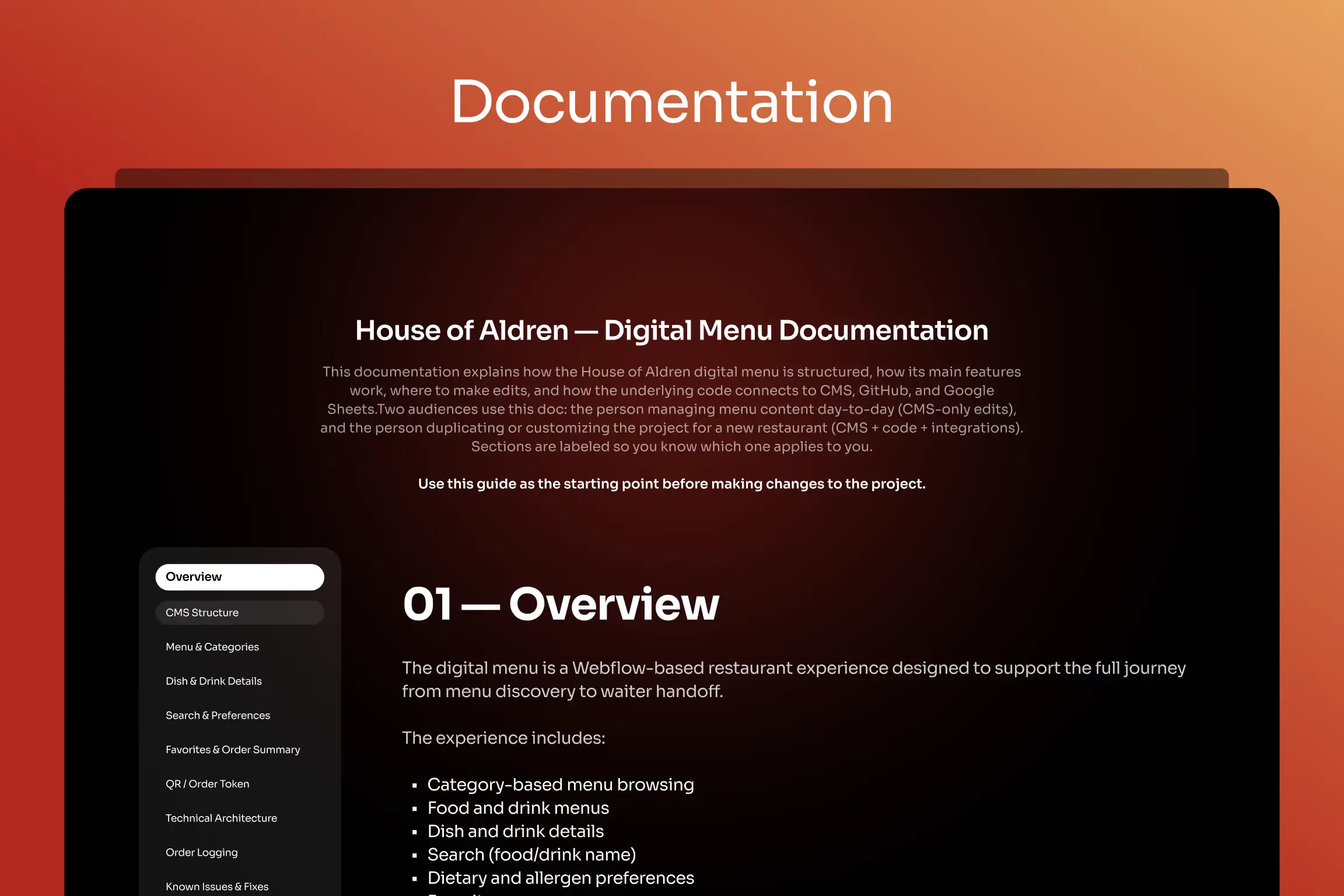
House of Aldren dining app design documentation

Next project

HR Management System
Web App · Webflow Build

An in-house HR Management System for AFEX, replacing costly third-party software with a comprehensive, tailored and cost-effective solution.

Joswell Ledger; Replacing a spreadsheet that lost sales
Product Design · AI Product Engineering · PWA

A family run store outgrew its Google Sheet the day a formula quietly stopped counting sales. Joswell Ledger replaced it with role based sales recording, approvals and one source of truth the whole team can trust.

Case study coming soon
Joswell Ledger desktop dashboard shown with the mobile Home and Approvals screens